Data Science & Machine Learning

Patrik Thomas
Michalski.

I research spatial and spatiotemporal data. My focus is on data analysis, modelling and machine learning.

Computer science doctoral researcher · Kiel University

Patrik Thomas Michalski
Kiel, Schleswig-Holstein, Germany

Projects

Data analysis, modelling and software development in my research projects.

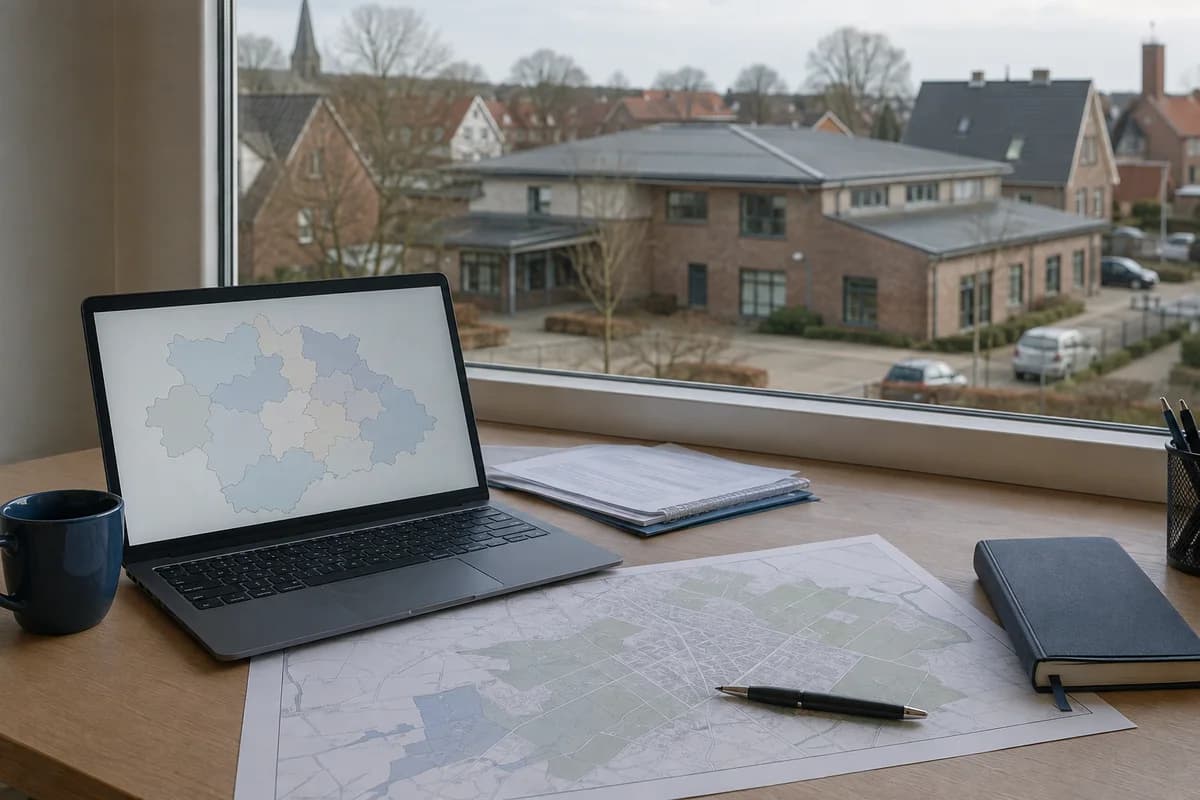
AI-generated symbolic image: regional planning desk with schematic maps and a view over a small town.AI-generated illustration
Pflege-Prognose+Ongoing

Data for regional care planning

Since July 2026, I have worked on data analysis for regional care-demand forecasts in Schleswig-Holstein, intended to support municipal and state planning.
since 07/2026Explore project
since 07/2026Ongoing

Pflege-Prognose+

My contribution

Since July 2026, I have worked on computing and data analysis in the project, focusing on forecasts of regional care demand. I will add methods and results here when they are ready for publication.

Project context

The state of Schleswig-Holstein supports Pflege-Prognose+ with approximately €400,000 through its AI funding programme. Together with Pflege-Monitor+, the project is intended to make data from municipalities, care providers and state authorities usable for care planning.

Funding and context
State of Schleswig-Holstein, AI funding guideline
Project website

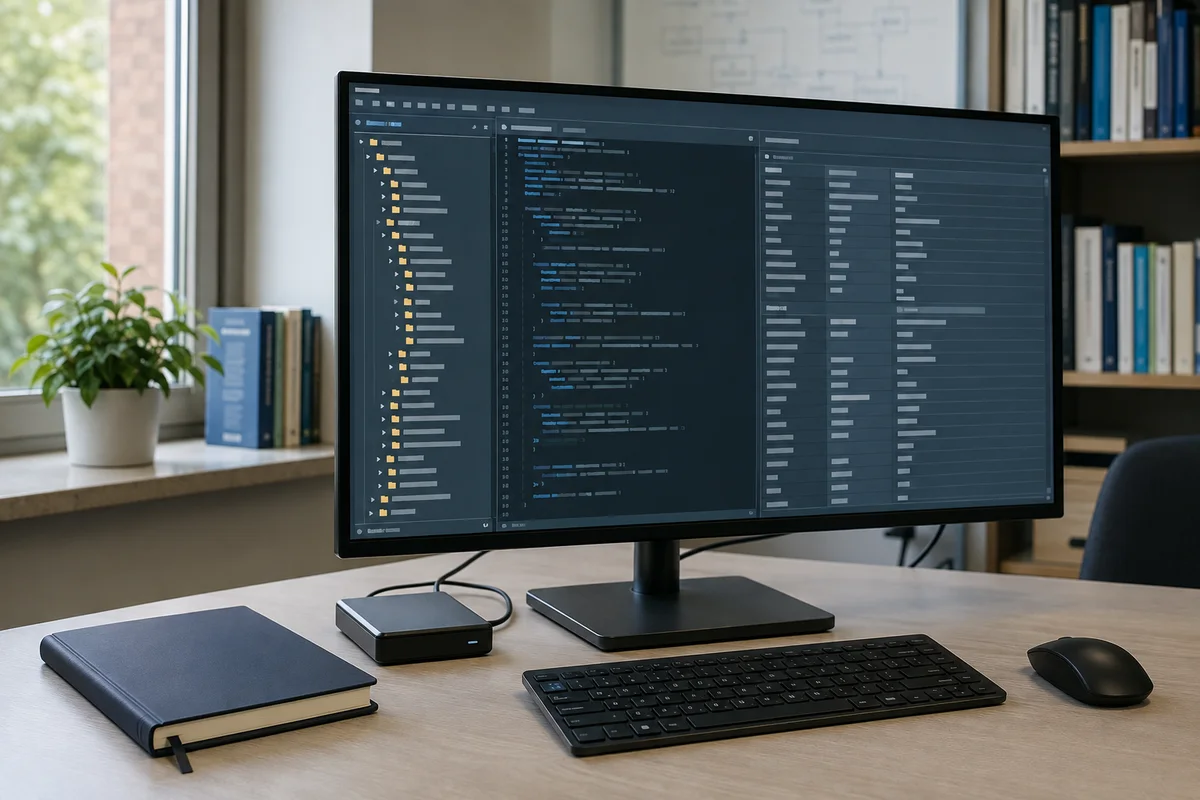
AI-generated symbolic image: research desk with schematic views of files, source code and metadata.AI-generated illustration
NFDIxCS

A shared schema for research data

I worked on extending a shared schema for describing empirical research to cover machine learning and databases. This work led to the paper on A-Posteriori Joint Schema Expansion.
01/2026 – 06/2026Explore project
01/2026 – 06/2026

NFDIxCS

My contribution

I examined how an existing joint schema represents empirical research in machine learning and databases/data-intensive systems. Based on a follow-up survey, we extended the schema from three to five computer-science disciplines and adapted it to the additional fields.

The resulting paper for the fourth NFDIxCS Symposium at the INFORMATIK Festival 2026 has been published. My involvement from January to June 2026 was part of my work at the University of Bayreuth.

Project context

NFDIxCS supports research data management in computer science according to the FAIR principles: data and software should be findable, accessible, interoperable and reusable. One consortium concept is the Research Data Management Container, which bundles related research artefacts.

Funding and context
National Research Data Infrastructure (NFDI)
Project website

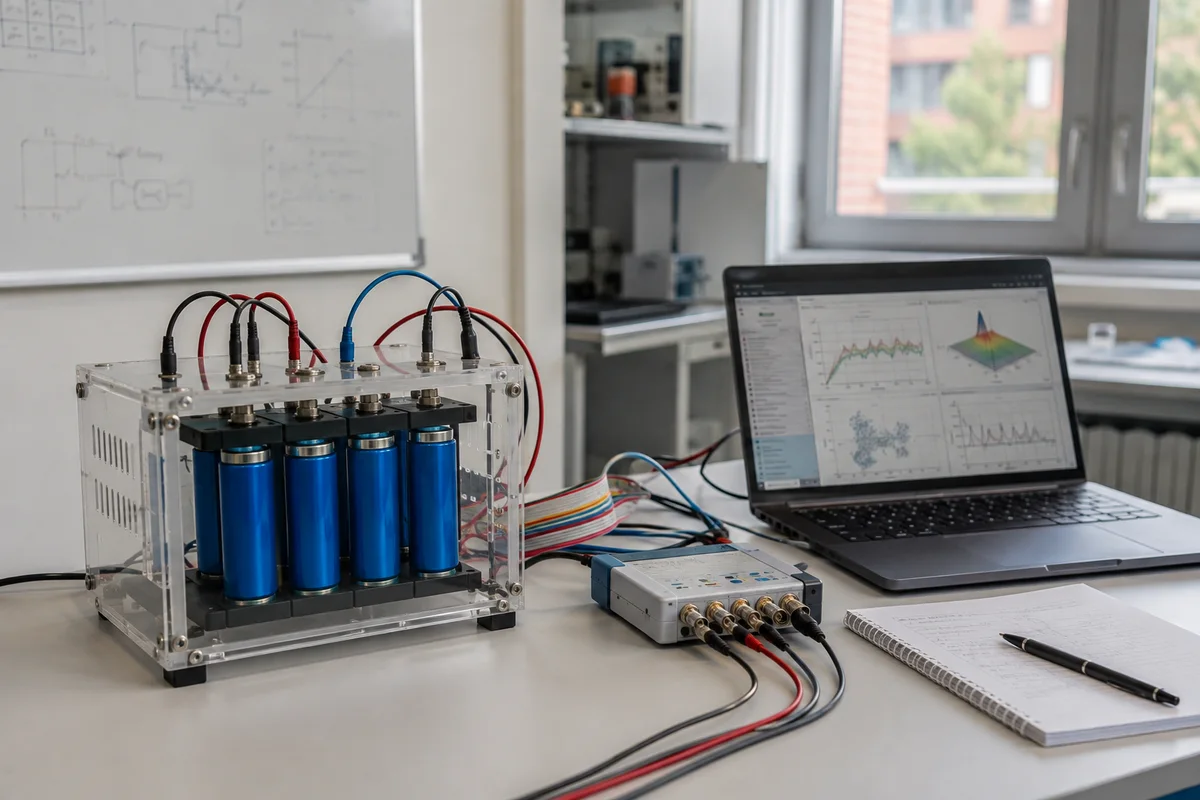
AI-generated symbolic image: battery test setup with data acquisition and schematic laptop analysis.AI-generated illustration
KI@CAU Datencampus Kiel

Data analysis across disciplines

I applied data-science methods to data from other disciplines, working with researchers in electrical engineering and physics.
10/2025 – 12/2025Explore project
10/2025 – 12/2025

KI@CAU Datencampus Kiel

My contribution

From October to December 2025, I applied data-science methods to data from the participating fields at the Datencampus and exchanged approaches with researchers in electrical engineering and physics.

Project context

In 2022, the state of Schleswig-Holstein awarded approximately €2 million to establish the Datencampus, initially for three years. Four tandems were intended to connect computer-science methods with research questions from other disciplines.

Funding and context
State of Schleswig-Holstein
Project website

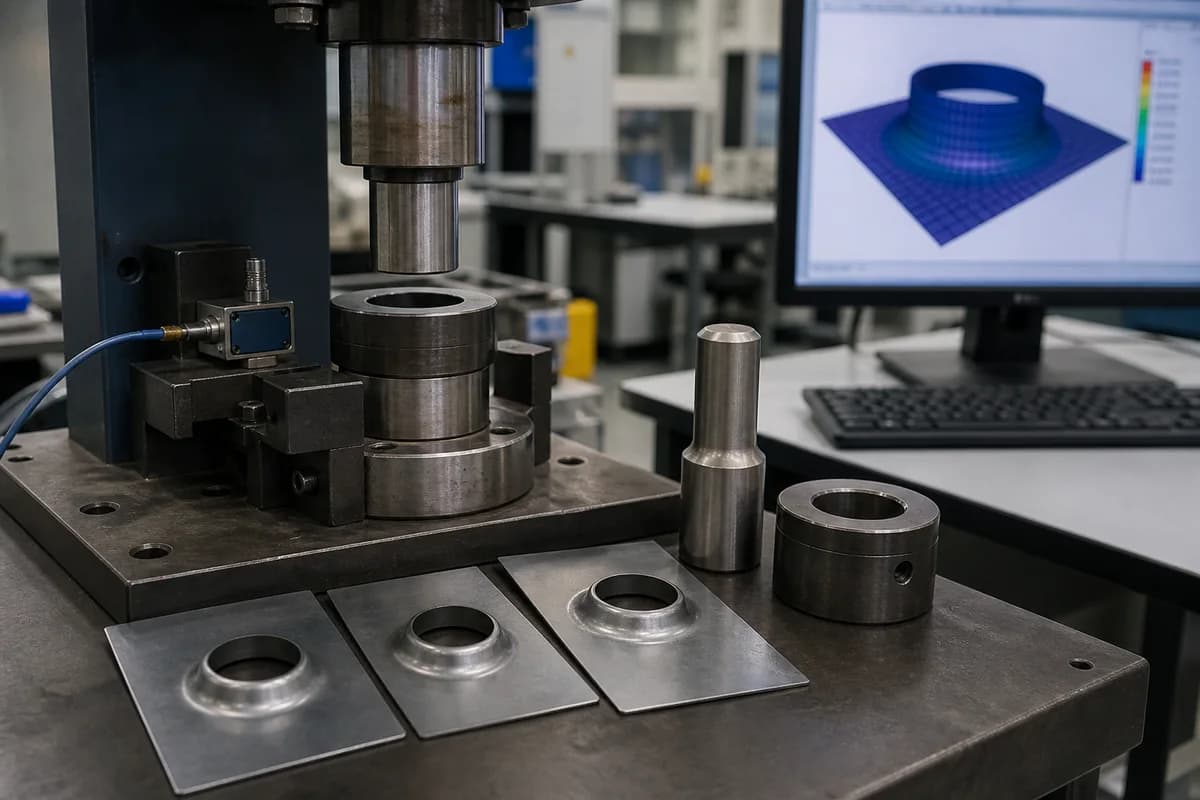
AI-generated symbolic image: instrumented tooling, sheet samples with formed collars and a schematic simulation.AI-generated illustration
DFG Priority Programme 2422

Synthetic data. Explainable models.

I developed a controllable force–displacement data generator and the modelling workflow for tool optimisation, including explainability analysis and checks against simulations.
04/2025 – 09/2025Explore project
04/2025 – 09/2025

DFG Priority Programme 2422

My contribution

I developed a generator for synthetic force–displacement curves with controllable material, geometry and loading parameters. The associated publication examines the use of these data to train and evaluate sequence models.

For the subsequent study of a surrogate model for tool optimisation, I developed the multilayer-perceptron workflow, an explainability analysis and the optimisation loop. Proposed punch surfaces were reconstructed from the model parameters and checked in additional finite-element simulations. The manuscript is under review.

Project context

DFG Priority Programme 2422 investigates data-driven models of metal-forming processes. It combines process data with expert knowledge and simulations. Prof. Mathias Liewald at the University of Stuttgart coordinates the programme.

Funding and context
German Research Foundation (DFG)
Project website

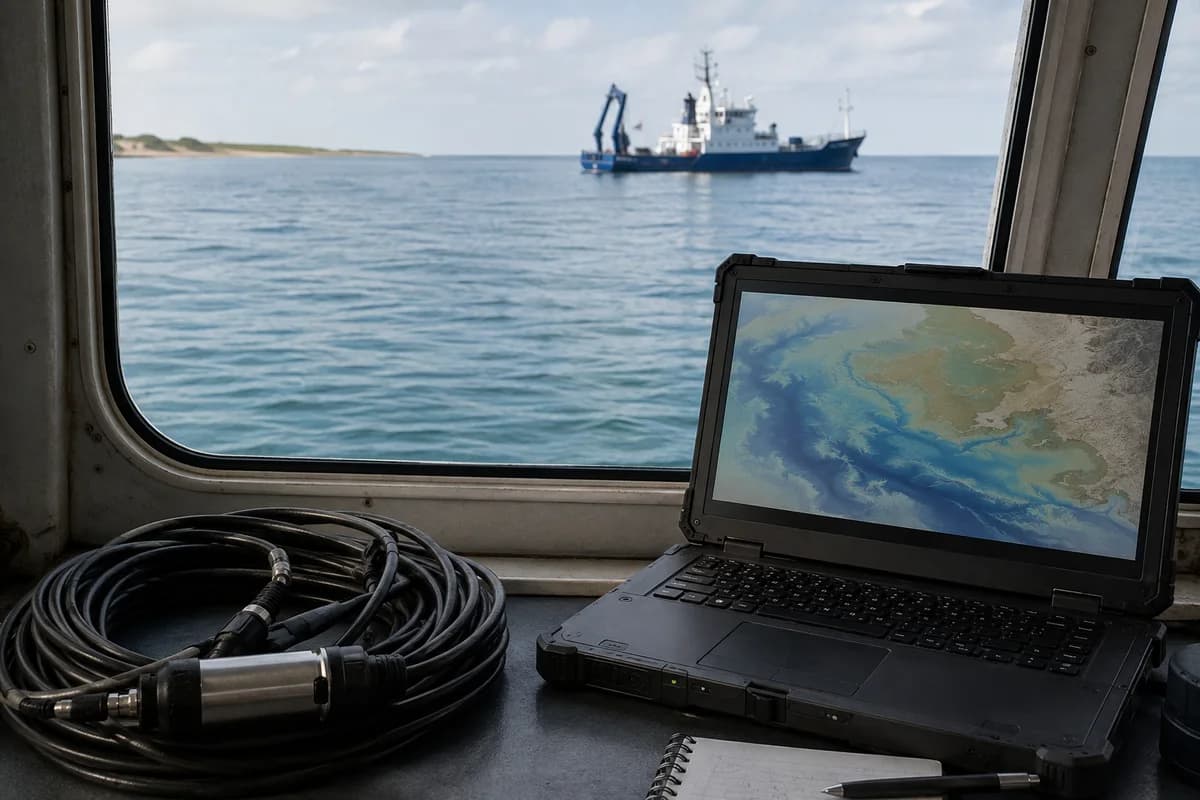
AI-generated symbolic image: a sensor, cable and rugged laptop with a schematic marine map aboard a vessel.AI-generated illustration
Marispace-X

Route planning with risk assessment

I investigated ship routing that accounts for collision risk and developed the spatial data management needed for it.

01/2023 – 03/2025Explore project
01/2023 – 03/2025

Marispace-X

My contribution

From January 2023 to March 2025, I worked on route planning and spatial data management. I investigated how the movement of other vessels can be taken into account when assessing collision risk and choosing routes.

Project context

Marispace-X was funded through Germany’s Gaia-X competition. Kiel University participated under the coordination of Prof. Dr. Matthias Renz. The consortium’s announced total budget was approximately €15 million.

The planned maritime data space connected edge, fog and cloud processing. Use cases included mapping seagrass meadows and legacy munitions, as well as using maritime data for shipping.

Funding and context
German federal funding through the Gaia-X competition
Project website

Research. With applications in mind.

I research spatial and spatiotemporal data and develop software for this work. I am interested in using incomplete or differently structured datasets to answer specific research questions. My focus is on data analysis, modelling and machine learning.

My research combines spatial data management, optimisation methods and synthetic data. Since January 2023, I have been pursuing a doctorate in computer science with Prof. Dr. Matthias Renz at Kiel University. Alongside research and software development, I have contributed to research and funding proposals.

Focus

  • Spatial data analysis
  • Spatiotemporal modelling
  • Applied AI and machine learning

Programming languages

  • C
  • C++
  • Java
  • Python

Spoken languages

  • GermanNative
  • PolishNative
  • EnglishC1

Career

Employment, research stays and education.

  1. since 01/2023

    Doctoral Researcher in Computer Science

    Present

    Kiel University · Kiel, Schleswig-Holstein, Germany

    Doctorate with Prof. Dr. Matthias Renz in the Archaeoinformatics – Data Science Group. My research covers spatial data management, maritime route planning and synthetic data. I continued my doctorate while employed at the University of Bayreuth.

  2. 04/2025 – 06/2026

    Research Associate

    University of Bayreuth · Bayreuth, Bayern, Germany

    Research in Prof. Dr. Agnes Koschmider’s Business Informatics and Process Analytics Group: data-driven modelling for metal forming in DFG Priority Programme 2422 and research data management in NFDIxCS.

  3. 01/2023 and 01–02/2024

    Research Stays at the InfoLab

    University of Southern California (USC) · Los Angeles, California, USA

    Two stays at the InfoLab of Prof. Cyrus Shahabi.

  4. 10/2020 – 12/2022

    M.Sc. Computer Science

    Kiel University · Kiel, Schleswig-Holstein, Germany

    Computer science studies leading to a Master of Science degree.

    Read the thesis: M.Sc. Computer Science
  5. 10/2018 – 12/2022

    Student Teaching Assistant

    Department of Computer Science, Kiel University · Kiel, Schleswig-Holstein, Germany

    Teaching support in the department, alongside my bachelor’s and master’s studies.

  6. 10/2017 – 09/2020

    B.Sc. Computer Science

    Kiel University · Kiel, Schleswig-Holstein, Germany

    Computer science studies leading to a Bachelor of Science degree.

    Read the thesis: B.Sc. Computer Science

Publications

Published, accepted and submitted research papers.

2027

  1. Under review

    SPIRE: Preference-Aware Linear Path Skyline Queries for Bicriteria Networks

    Preuß, N., Beth, C., Michalski, P. T., Wölker, Y., Mouratidis, K., Renz, M.

    ACM SIGMOD/PODS 2027

2026

  1. Published

    The False Consensus Trap in Interdisciplinary Data-Driven Engineering Research Projects

    Baum, S., Michalski, P. T., Vogel-Heuser, B., Koschmider, A., Jazdi, N., Weyrich, M.

    31st IEEE ETFA 2026, Track 9, Västerås, Sweden

  2. Published

    A-Posteriori Joint Schema Expansion for Empirical Research Knowledge in Computer Science

    Michalski, P. T., Britton, M., Maldonado, A., Almohaishi, M., Karras, O., Koschmider, A.

    4th NFDIxCS Symposium, INFORMATIK Festival 2026, Dresden, Germany

  3. Under review

    A Data-Driven Surrogate Model for Tool Design Optimization in Multi-Stage Shear Cutting and Collar Forming Processes

    Hahn, D. L., Fonger, F., Michalski, P. T., Riemer, M., Kräusel, V., Koschmider, A., Dix, M.

    Production Engineering (Springer)

2024

Get in touch.

Have a role in mind or a question about my work? I look forward to hearing from you.

0 / 5,000 characters

Read the privacy policy for details on how I handle your data.

You can also contact me using the email address in the legal notice.